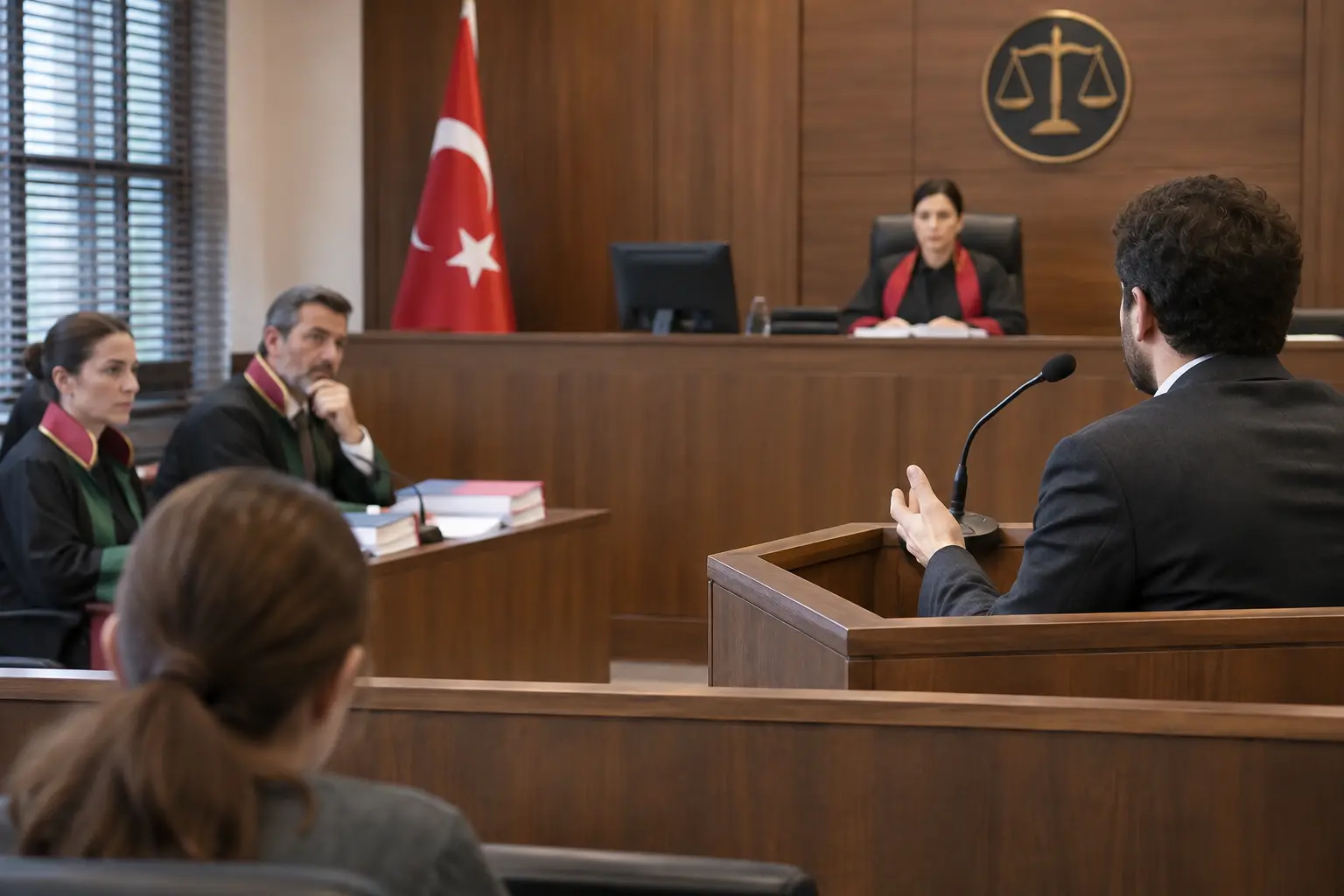
Witness evidence plays an important role in divorce cases in Ortaca. Witnesses may provide information about events that have affected the marriage, the conduct of the spouses and the circumstances relevant to the divorce proceedings. However, the court evaluates witness statements according to their content, consistency and evidential value.
What Is Witness Evidence in Divorce Cases in Ortaca?
Witness evidence is a form of evidence through which individuals who have knowledge of relevant events provide statements before the court. In divorce proceedings, witnesses may testify about disagreements between the spouses, alleged misconduct, family relationships and other circumstances relevant to the case.
The court does not automatically accept every witness statement as proof of an allegation. The content of the testimony, whether it is based on the witness's personal observations and its consistency with other evidence are considered together.
Legal Basis of Witness Evidence in Divorce Cases
Witness evidence in civil proceedings is primarily regulated by the Turkish Code of Civil Procedure (Law No. 6100). Articles 240 and subsequent provisions set out the rules concerning witness lists, the summoning of witnesses, their examination and the right to refuse to testify.
Article 184 of the Turkish Civil Code also provides that the judge evaluates the evidence freely in divorce proceedings. Accordingly, witness statements are assessed together with the other evidence submitted in the case.
Who Can Be a Witness in a Divorce Case?
Family members, friends, neighbours, colleagues and other individuals who have knowledge of relevant events may be called as witnesses in a divorce case. A person does not have to be unrelated to either spouse to testify.
However, certain individuals have the right to refuse to testify under Articles 247 and 248 of the Turkish Code of Civil Procedure. Whether this right applies depends on the person's relationship with the parties and the statutory conditions.
How Is a Witness List Prepared in a Divorce Case?
The parties must submit their witness lists in accordance with the deadline and procedural instructions set by the court. Under Article 240 of the Turkish Code of Civil Procedure, the list should include each witness's full name, an address suitable for service of process and the facts about which the witness is expected to testify.
As a general rule, a second witness list cannot be submitted. Therefore, the parties should carefully identify the witnesses they intend to rely on and specify the relevant facts in accordance with procedural requirements.
How Are Witnesses Heard in Divorce Proceedings?
Witnesses are generally summoned to attend a court hearing and give their statements. The court may ask questions to clarify the events and circumstances about which they have knowledge. The parties may also ask questions in accordance with the applicable procedural rules.
Under Article 245 of the Turkish Code of Civil Procedure, a witness who has been duly summoned is generally required to attend, subject to statutory exceptions. Failure to attend without a valid excuse may result in the legal consequences provided by law, including compulsory attendance.
First-Hand Knowledge and Hearsay Testimony
A distinction should be made between testimony based on a witness's own observations and statements based on information received from someone else. A witness who personally saw or heard an event can provide first-hand information about it.
By contrast, a witness who merely repeats what another person has said provides hearsay testimony. Such statements may still be evaluated by the court, but the fact that the witness did not personally observe the event may affect the evidential weight of the testimony.
Are Witness Statements Sufficient on Their Own in a Divorce Case?
Witness statements may be important in establishing facts relevant to a divorce case. However, whether they are sufficient depends on the specific circumstances, the consistency and detail of the statements and their compatibility with other evidence.
General, vague or unsupported statements do not necessarily establish the allegations made by either spouse. The court assesses the credibility and evidential value of each statement as part of the overall evaluation of the case.
Can Family Members Refuse to Testify in a Divorce Case?
Yes. Although relatives such as parents, children and siblings may be called as witnesses, certain family members have the right to refuse to testify under Article 248 of the Turkish Code of Civil Procedure, subject to the conditions set out in the law.
The right to refuse to testify is different from the question of whether a person may be listed as a witness. The applicable rules should be assessed according to the individual's relationship with the parties and the circumstances of the case.
Witness Statements in Court of Cassation Decisions
The Court of Cassation has emphasised the importance of evaluating witness statements according to their content and evidential value. Statements that are general, indirect or based solely on information received from others may not be sufficient, on their own, to establish the facts alleged in a divorce case.
Therefore, the court should consider whether a witness personally observed the relevant events, whether the testimony is consistent and whether it is supported by other evidence. Each case must be assessed according to its own circumstances.
The Importance of Witness Evidence in Divorce Cases in Ortaca
Witness evidence may help clarify disputed events and provide information about the circumstances of the marriage. Choosing appropriate witnesses and identifying the facts they can personally testify about may be important when preparing a divorce case.
In divorce proceedings, witness statements should be considered together with documents, messages, photographs and other legally admissible evidence where relevant. The evidential value of each item depends on the facts of the individual case.
Legal Assistance for Witness Evidence in Divorce Cases in Ortaca
Witness evidence may raise important procedural and evidential questions, including the preparation of witness lists, the right to refuse to testify and the evaluation of first-hand and hearsay statements. Individuals involved in divorce proceedings in Ortaca may seek legal advice to understand the applicable rules and assess their circumstances.
Frequently Asked Questions
Who can be called as a witness in a divorce case?
Family members, friends, neighbours, colleagues and other individuals who have knowledge of relevant events may be called as witnesses. However, the statutory right of certain individuals to refuse to testify must also be considered.
Can a mother, father or sibling testify in a divorce case?
Yes. Parents and siblings may be called as witnesses. However, Article 248 of the Turkish Code of Civil Procedure grants certain close relatives the right to refuse to testify, subject to the conditions set out in the law.
How many witnesses can be called in a divorce case?
There is no single fixed number of witnesses that applies to every divorce case. The parties may identify witnesses for the facts they intend to prove. However, the court may decide that it has sufficient information and does not need to hear every witness listed.
When must the witness list be submitted in a divorce case?
The witness list must be submitted in accordance with the deadline and procedural instructions set by the court. Under Article 240 of the Turkish Code of Civil Procedure, it should include the witnesses' names, addresses and the facts about which they will testify. As a general rule, a second witness list is not permitted.
Is hearsay testimony accepted in a divorce case?
Hearsay statements may be evaluated by the court, but a witness repeating information received from someone else may have less evidential value than a witness who personally observed the events. General statements unsupported by other evidence may not be sufficient to establish an allegation.
Is a witness required to attend a divorce hearing?
A witness who has been duly summoned is generally required to attend, subject to statutory exceptions. Failure to attend without a valid excuse may result in the legal consequences set out in Article 245 of the Turkish Code of Civil Procedure.
Can a witness be related to one of the spouses?
Yes. Being related to one of the spouses does not automatically make a person's testimony invalid. The court evaluates the witness's relationship with the parties and the credibility of the statement together with the other evidence. Certain relatives may also have the right to refuse to testify.
Are witness statements sufficient on their own in a divorce case?
Witness statements may be important evidence, but their sufficiency depends on their detail, consistency, whether they are based on personal observations and how they relate to other evidence. Each case is assessed according to its specific circumstances.
Need Legal Assistance?
For information about witness evidence, witness lists, testimony and divorce proceedings in Ortaca, you may contact Esra Kırşavoğlu Law Office.
Contact Us